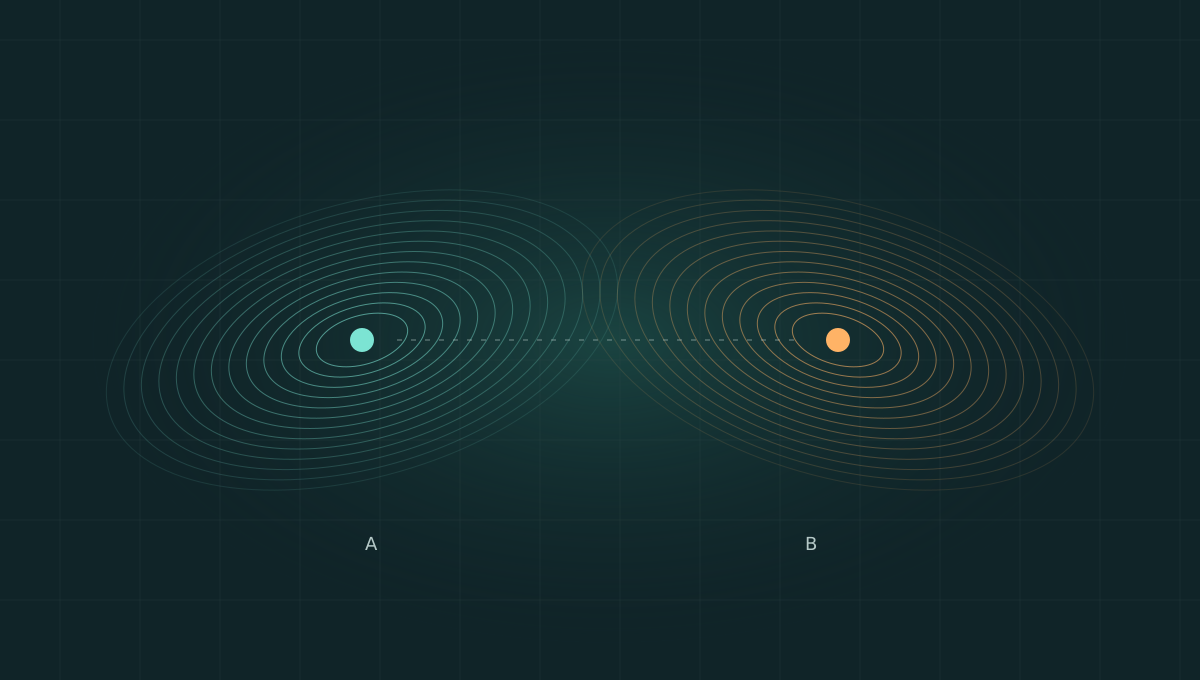
Penrose and gravitational objective reduction
Understand what Penrose actually proposed, why spacetime enters the measurement problem, and what observations could test it.
Read the sample chapter↗
A question at the meeting point of gravity and quantum mechanics opens a wider journey through shape, matter, energy and measurement.
Roger Penrose proposes that sufficiently different gravitational configurations make a quantum superposition unstable.
His argument begins with alternative arrangements of mass and the different spacetime geometries associated with them. It proposes a physical event that does not need a conscious observer to trigger it.
The proposal is testable in specified models. It is not an established universal law. Our opening chapter follows Penrose’s argument, the experiments that constrain related models, and the questions that remain.
Read the opening investigation ↗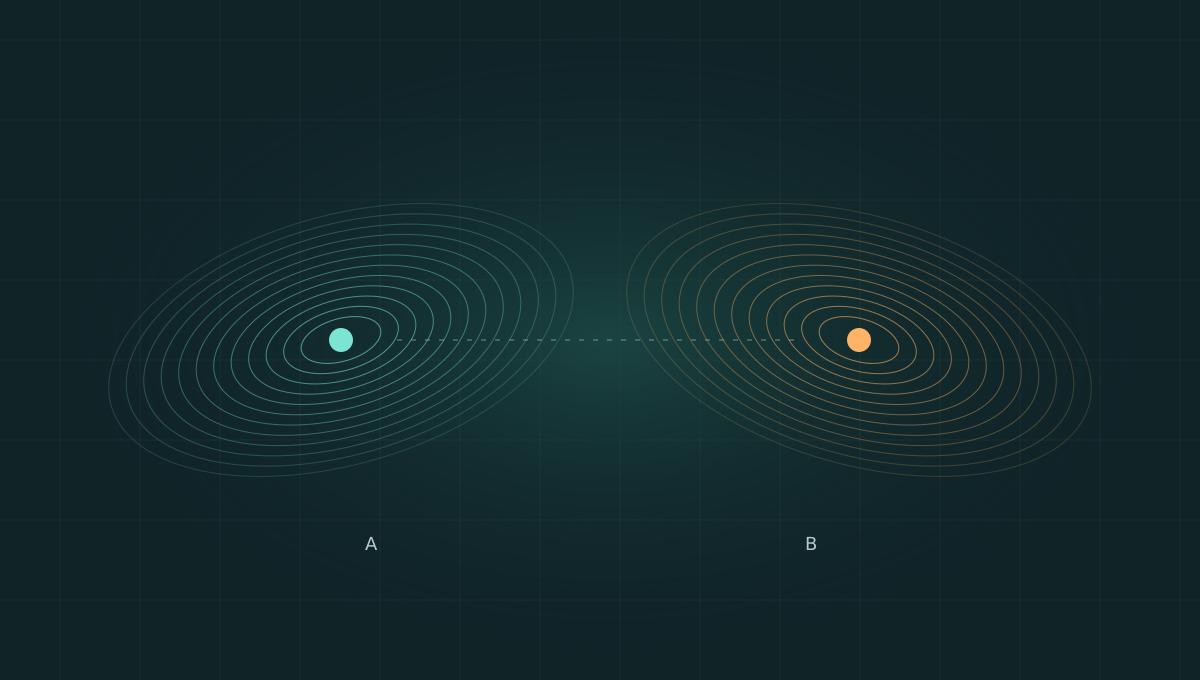 ALTERNATIVE CONFIGURATIONS / A + B
Concept illustration of alternative configurations, not a calculated spacetime metric.
Hear Penrose’s own account · Oxford, 2019 ↗Stretch it. Compress it. Change its boundaries. Let it meet another wave.
Each action opens a different physical question. Did the energy move? Did the waveform change? Did interference become inaccessible? Did a detector register a particular outcome?
Compression was the question that sharpened this atlas. Squeezing a material, a cavity, a pulse and a quantum state are four different experiments. Each needs its own model and evidence.
Follow the compression chapter ↗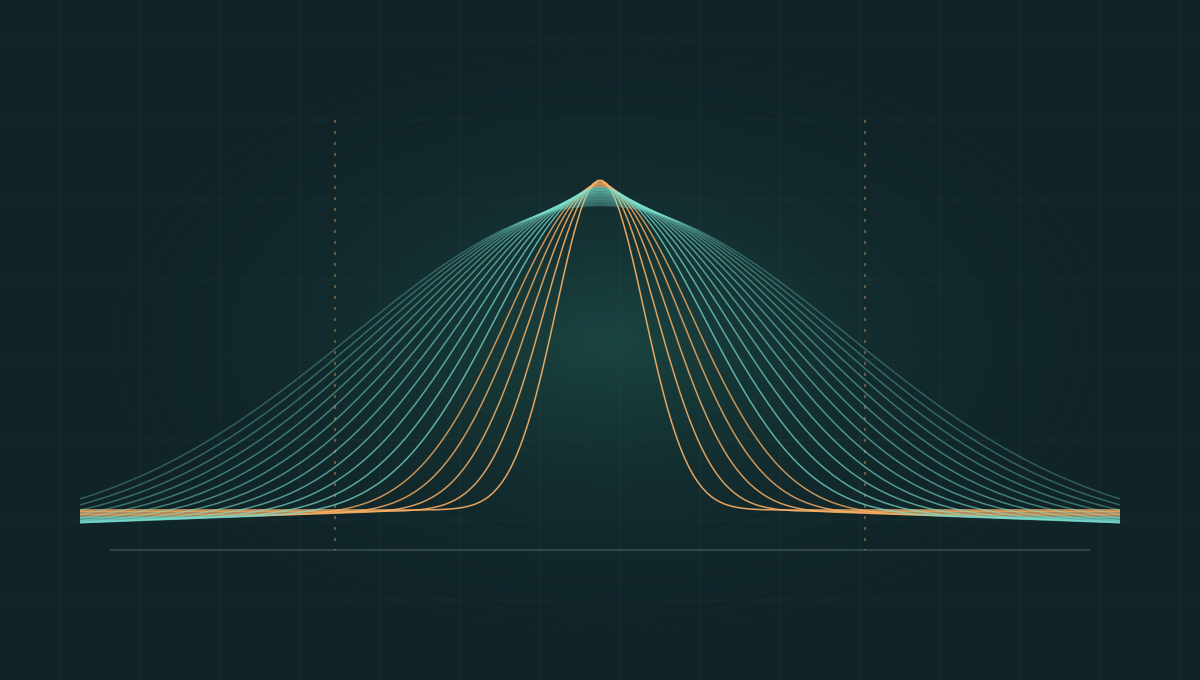
Compression changes a specified width or confinement. A smaller shape alone does not identify its cause.
A disappearing trace can have several explanations. The atlas follows the observable, the energy account and the experiment that distinguishes them.
Waveforms can spread, narrow, interfere, scatter or transfer energy into their surroundings. The original pattern may disappear while motion continues elsewhere.
Explore transformations ↗Information about alternatives can enter an environment. Local interference may disappear even when the combined quantum description remains coherent.
Understand decoherence ↗Measurement gives definite records. Objective-collapse proposals ask whether additional physical dynamics explain how one outcome emerges.
Return to the central question ↗The design maps 29 sections into distinct reading journeys. Start with the two researched sample chapters, then inspect the complete publication blueprint.
Understand what Penrose actually proposed, why spacetime enters the measurement problem, and what observations could test it.
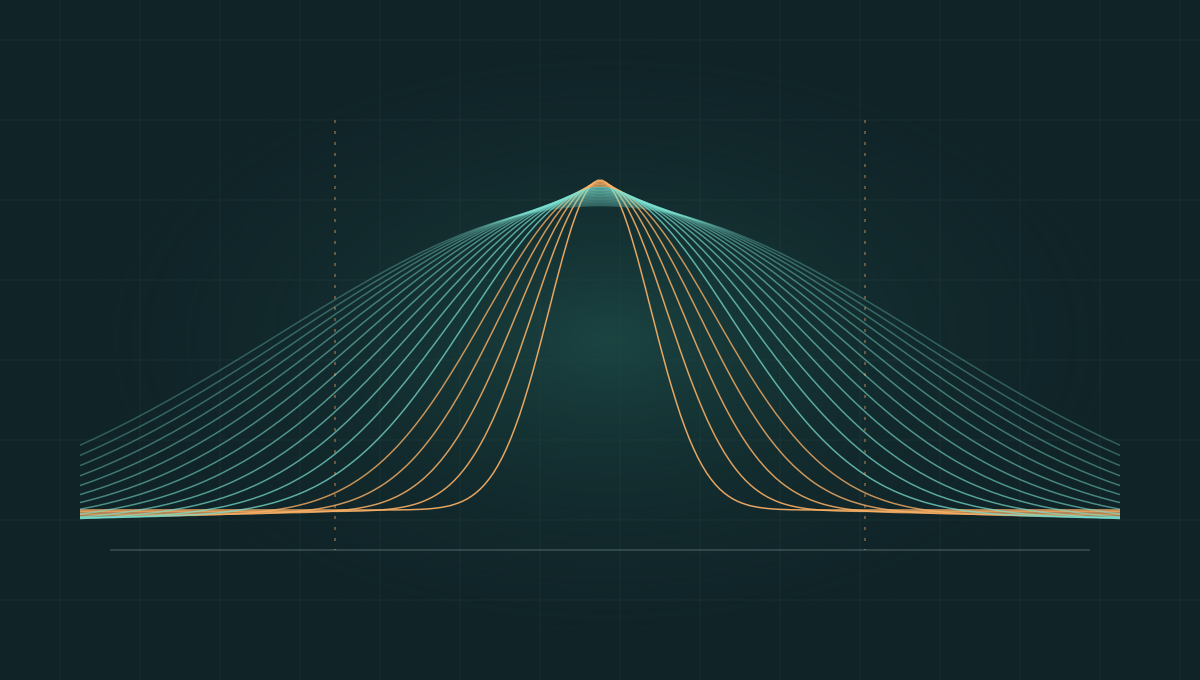
Explain how reducing size, volume, gap, pulse duration, or quantum uncertainty changes the relevant system.
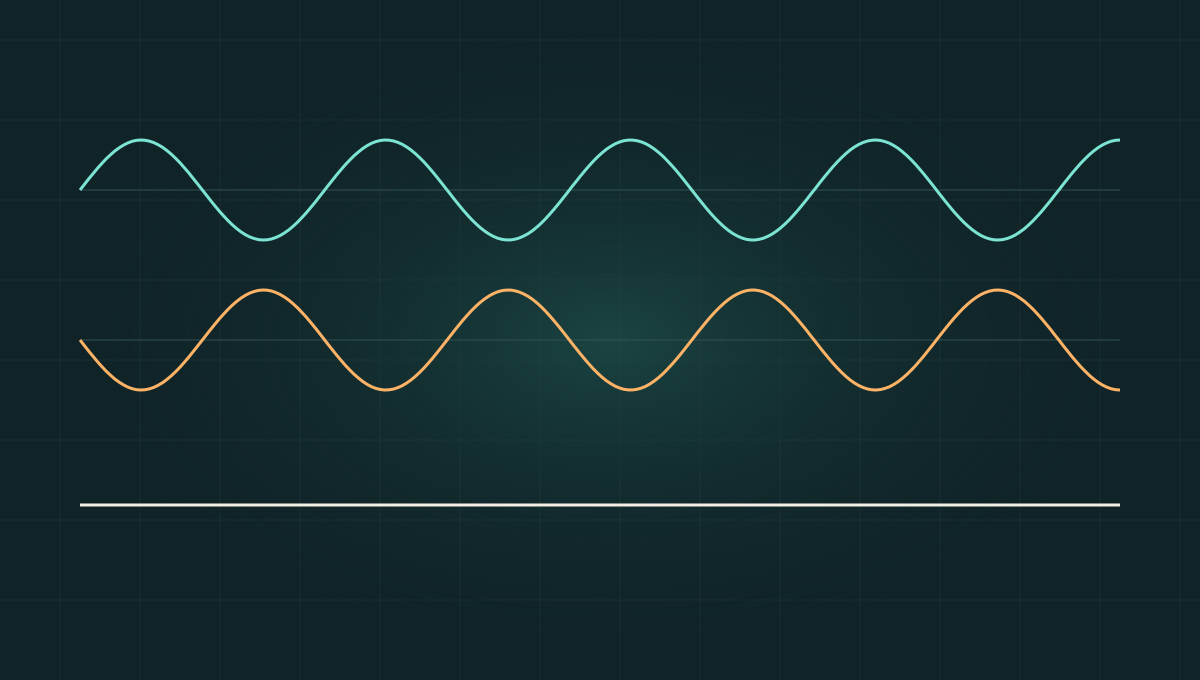
Understand when disturbances cancel and follow the energy and quantum amplitudes through the full setup.

Understand joint quantum correlations and distinguish them from classical correlation and local state reduction.

Explain what scattering changes and how angular, spectral, and correlation measurements identify the interaction.

Explain how energy and amplitude move between distinct modes and what conditions enable useful conversion.
A connected investigation across geometry, energy, materials, atmosphere and living systems. The ambition is to turn questions into experiments that can tell competing explanations apart.
Meet the founder and related projects ↗“What changes?” is the beginning.
“How would we know?” moves the work forward.