
Penrose and gravitational objective reduction
Understand what Penrose actually proposed, why spacetime enters the measurement problem, and what observations could test it.
Read the sample chapter↗
Explore the complete mechanism inventory. Two sample chapters are available; each remaining section links to its detailed ten-page publication plan.
Understand what Penrose actually proposed, why spacetime enters the measurement problem, and what observations could test it.
Determine what is being stretched and predict changes in wavelength, packet width, energy distribution, or coherence.

Separate flattening a visible crest, an intensity profile, a probability distribution, and a field expectation value.
Explain how reducing size, volume, gap, pulse duration, or quantum uncertainty changes the relevant system.

Understand when disturbances cancel and follow the energy and quantum amplitudes through the full setup.
Trace how energy leaves a wave or mode and what happens to coherence and the absorbing system.

Explain what scattering changes and how angular, spectral, and correlation measurements identify the interaction.
Identify what twists, what angular momentum is involved, and how the resulting wave can be measured.
Determine whether a claim concerns a phase transition, cooling, halted propagation, stored excitation, or a measurement protocol.
Understand how material properties alter propagation, dispersion, loss, and allowed excitations.
Separate the end of a driving signal from propagation, stored energy, ringdown, and detection delay.
Understand the source of gain, what gets amplified, and how noise, bandwidth, and saturation constrain it.

Explain what phase information is scrambled, how visibility changes, and which processes can be reversed.

Determine why a region fails to support a propagating mode and what happens to incident energy and information.
Explain how measurable outcomes arise operationally and what remains debated about state reduction.

Explain particle-antiparticle reactions, their observable products, and why the word annihilation does not mean absolute nothingness.
Understand joint quantum correlations and distinguish them from classical correlation and local state reduction.

Compare particle collisions, nonlinear wave encounters, and ordinary wave overlap without treating them as the same event.
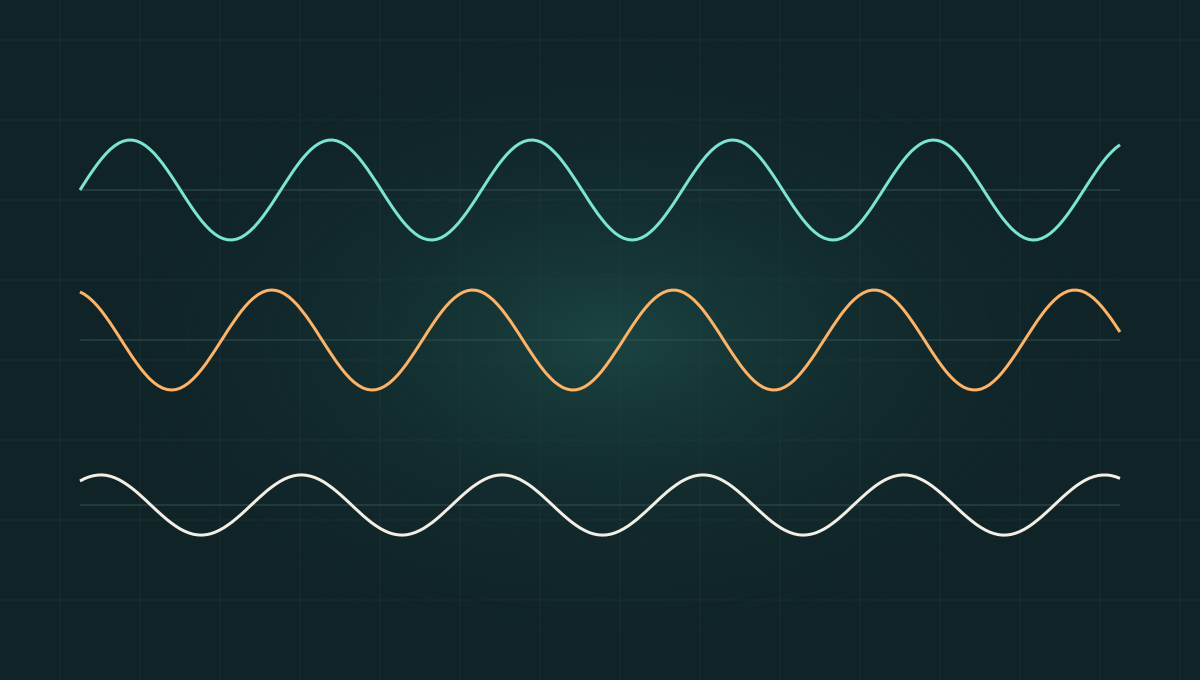
Explain coherent reinforcement, spatial concentration, and the limits imposed by phase, overlap, sources, and conservation.

Understand fusion as a specific physical reaction and compare it carefully with looser uses of the word joining.
Identify whether two incoming structures actually become a persistent combined object or merely overlap temporarily.
Explain enhanced response near a mode or transition and show how to distinguish resonance from synchronization and interference.
Distinguish evolution, propagation delay, decoherence time, lifetime, and an observed disappearance of a signal.
Identify what decays, where the energy or information goes, and what lifetime measurements establish.
Determine which property is opposite and what interaction law, if any, follows from that relationship.

Explain what is divided when waves or quantum states enter multiple outgoing channels.
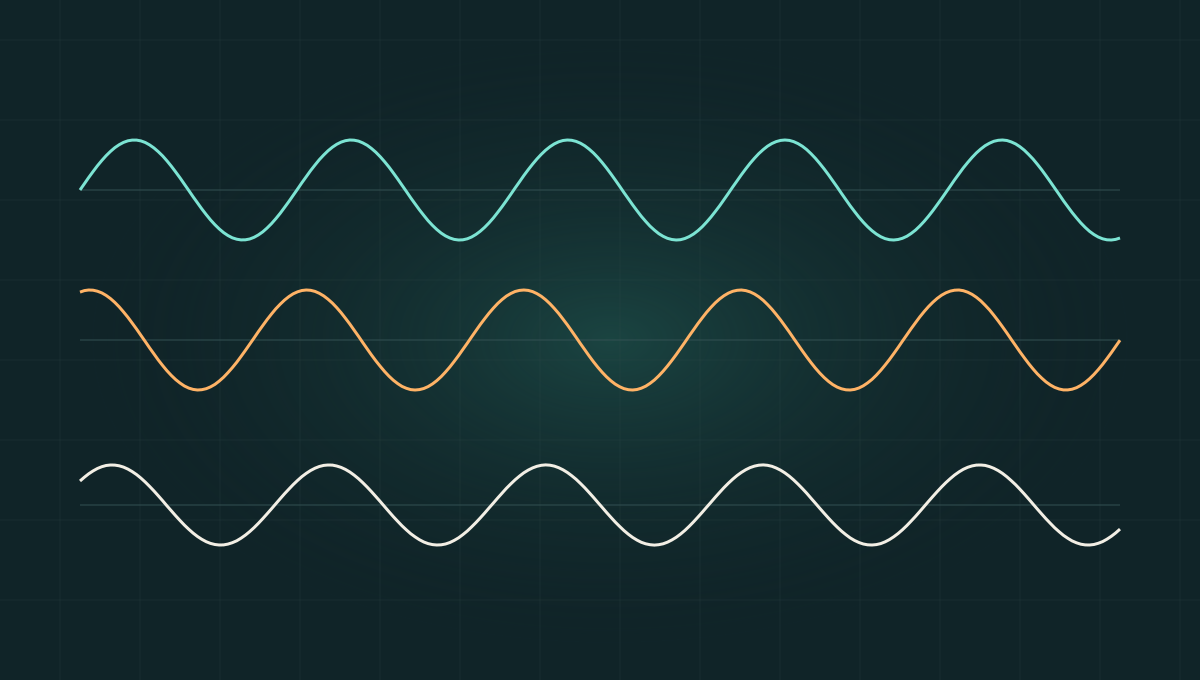
Understand frequency and phase locking and distinguish coordinated dynamics from structural deformation and collapse.

Trace the response to a sudden applied disturbance and separate local crest suppression from whole-system disappearance.
Explain how energy and amplitude move between distinct modes and what conditions enable useful conversion.
No sections match that search. Try a broader term or select “All sections.”